Free virtual SUPAR 'Short' Seminar focusing on substance abuse treatment in Northwest Colorado

 Live Webinar
 Oct 30, 2020
 Steamboat Springs, Colorado, USA
 3 CME ...
Speakers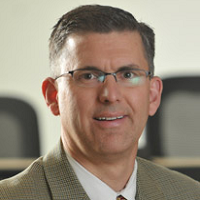
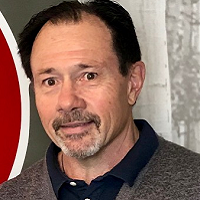
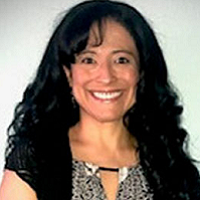
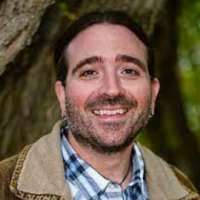
OVERVIEW
Free virtual SUPAR 'Short' Seminar focusing on substance abuse treatment in Northwest Colorado is organized by Colorado Medical Society (CMS) and will be held on Oct 30, 2020.
Accreditation:
Credit Designation:
The Colorado Medical Society designates this live activity for a maximum of 3 AMA PRA Category 1 Credits™. Physicians should claim only the credit commensurate with the extent of their participation in the activity.
The Colorado Medical Society designates this live activity for a maximum of 3 Hour(s) Attendance w/ No Credit. Participants should claim only the credit commensurate with the extent of their participation in the activity.
Description:
SUPAR (Substance Use Prevention and Recovery) ‘Short’ Seminar
Four virtual presentations covering trauma-informed care, medication-assisted treatment (MAT) best practices and mobile services, prescription drug epidemic update and a judicial panel discussion. Hosted by Northwest Colorado substance abuse treatment providers and stakeholders, including Memorial Regional Health, Grand Futures Prevention Coalition and Front Range Clinic. With free CME provided by Colorado Consortium for Prescription Drug Abuse Prevention.
9 a.m. Drug Epidemic Overview, Legislation, and Advocacy
Robert Valuck, PhD, RPh, FNAP, Colorado Consortium for Prescription Drug Abuse Prevention. Dr. Valuck will explain major factors that have contributed to the current US epidemic of opioid misuse, abuse, overdose, and death, including the recent impacts of COVID-19. This presentation will also provide an overview of new Colorado laws, regulations, and guidelines (policies) pertaining to controlled substances and give audience members an insight into the state’s path forward in this work. Dr. Valuck also serves as the Coordinating Center Director of the Colorado Consortium for Prescription Drug Abuse Prevention.
10 a.m. Trauma Integrated Addiction Treatment: What Is It?
Michael Barnes, PhD, MAC, LPC. Chief Clinic Officer, Foundry Treatment Center. No matter who you speak to in the addiction treatment world, they will tell you that they do trauma informed or trauma integrated treatment. But what does that mean and what should that look like? This presentation will offer a developmental model and a set of axioms that can be utilized in the development of effective trauma integrated treatment. The Neuro Affective Relational Model (NARM) will be proposed as a central organizing theory for assisting clients to work simultaneously with achievement of addiction milestones and resolution of day-to-day trauma symptoms. NARM is a treatment model designed to address developmental trauma, based on somatic psychotherapy, attachment theory and regulation of the autonomic nervous system. NARM developmental themes of connection to self and others, attunement to needs, trusting self and others, autonomy and boundary setting, and the ability for love/sexuality will be highlighted. This presentation will also outline specific gender, cultural, and ecological issues that will need to be addressed to meet the unique demands of treatment in rural environments.
11 a.m. Medication-Assisted Treatment Best Practices & Mobile Health Services
Dr. Jeremy Dubin, DO, FASAM. Front Range Clinic Medical Director.
Donna Goldstrom, LAC, LPC. Front Range Clinic Clinical Director
Mobile treatment services have proven to be an effective way to provide treatment to Coloradans in the rural and frontier parts of the state. The Colorado Department of Human Services, Office of Behavioral Health with $6.7 million from the State Opioid Response grant, is providing six mobile health units specializing in medication-assisted treatment (MAT) to improve access to MAT in rural and underserved areas of Colorado. In addition to these six units, mobile treatment options are available through pop-up clinics. Front Range Clinic is operating four of the six mobile health units.
Noon Substance Use Disorder in the Criminal Justice System
We've assembled a panel of experts to discuss the impacts of substance use disorder on the criminal justice system. With Craig Thornhill, James McLaughlin, Matt Karzen, Valerie Resendez, Emily Richardson and facilitated by JK Costello. CME credit not offered for this session.
Objectives:
• Participants will learn about the origin, challenges , and current solutions with the mobile unit program
• Participants will learn how to provide effective telehealth MAT services
• Participants will learn what the future brings with how we will continue to provide mobile MAT services.
• Attendees will compare symptom differences between PTSD and developmental trauma, and recognize how both impact the development and maintenance of addiction.
• Attendees will be able to implement NARM developmental themes of connection, attunement to needs, trust, autonomy, and love/sexuality as critical competencies to be achieved in order for clients to recover from both addiction and trauma issues.
• Attendees will understand and be able to address cultural, gender, and ecological issues that complicate implementation of trauma integrated treatment principles.
• Explain major factors that have contributed to the current US epidemic of opioid misuse, abuse, overdose, and death.
• Identify new Colorado laws, regulations, and guidelines (policies) pertaining to controlled substances.
• Differentiate mandatory (legal and regulatory) vs. recommended (guideline based) prescribing parameters.
KEY DATES

30 Oct, 2020
Event Start Date

30 Oct, 2020
Event End Date
ACCREDITATION & CREDITS

SPECIALITIES
Rural MedicineBehavioral HealthTraumaAddiction MedicineRELATED CONFERENCES & LIVE WEBINARS
By Provider Practice Essentials...
Webcast
State required course for Dist of Col ...
10 CME

Quick Links