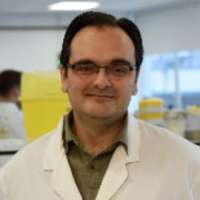
Sterghios Moschos PhD, FRSC, FIBMS, MRSB
Molecular Biology, Pharmacy and Medicine
Newcastle upon Tyne, England, United Kingdom
Connect with the speaker?
Dr. Sterghios Moschos trained as a Molecular Biologist at the University of Portsmouth, he did his PhD in Pharmaceutics on nasal vaccines with Prof. Oya H. Alpar at the Centre for Drug Delivery Research, School of Pharmacy, which is now part of UCL. After a 3-year post-doc on genetic adjuvants and siRNA formulation science, he joined Prof. Mark A. Lindsay, Maria Belvisi and Peter J. Barnes at the National Heart and Lung Institute, Imperial College, to explore cell-penetrating peptide-mediated siRNA delivery to the lungs. Here, he expanded this work to biodefence (with dstl), and described the microRNA regulatory networks in airway inflammatory disease.
He was then headhunted in 2008 by Pfizer Global Research and Development at Sandwich, Kent, to lead oligonucleotide therapeutics research for respiratory indications. Working parallel to Art Krieg’s RNAi-focused Pfizer Research Technology Centre, and closely with colleagues within the Pfizer Coley Pharmaceutical Group, Pfizer Antivirals and Tacere (later acquired by Benitec), Sterghios was instrumental in ensuring the safety of DNA-directed RNAi gene therapy for hepatitis C virus, pioneering inhaled administration of oligonucleotide drugs for liver and kidney diseases, and developing novel methods for reducing animal use in pharmacology research by up to 66%. His work was recognised as a breakthrough by the American Society of Gene and Cell Therapy, defining pharmaceutical sector strategy in terms of antisense and RNAi therapies for the lung.
Joining the University of Westminster in 2011 as a Reader in Industrial Biotechnology and Biochemistry, Sterghios established Westminster Genomic Services around the then-emerging Ion Torrent next-generation sequencing platform to receive the first Certified Service Provider status in the UK, offering GLP-grade internal and external research services. Devising the RACE-SEQ method now established across the RNAi industry, and crucial in the accelerated initiation of first-in-human clinical trials for DNA-directed RNAi, he was the first to digitally quantify the imprecision of human Argonaute 2 activity. Working closely with Prof. Izzet Kale (Dept. Electronic Engineering, University of Westminster), Sterghios also developed PulmoScreen, a novel, patent-protected exhaled breath condensate collection device platform. Responding to the emerging need of the West African Ebolavirus outbreak, Sterghios established and lead the EbolaCheck consortium to conceive, design, deliver and validate with 12 months the first nucleic acid amplification test (NAAT) screening platform. The technology is suited for laboratory-free use at the point of need in resource-limited settings, is now available commercially and for future use in screening symptomatic patients for Ebolavirus disease, and is under further development for pre-symptomatic differential diagnosis of multiple haemorrhagic fevers.
EVENTS & ACTIVITIES (Speaking, Spoken, and Authored)


Connect With Us


Awards & Recognitions
- 50 Division Street, Suite 501,
- Somerville, NJ 08876
- support@emedevents.com