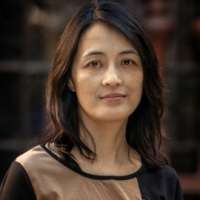
Shu-ou Shan PhD
Biochemistry and Molecular Genetics, Physiology and Biophysics
Pasadena, California, United States of America
Connect with the speaker?
Shu-Ou Shan, Ph.D. completed her undergraduate degree in Chemistry and Biochemistry at the University of Maryland, and her doctorate at Stanford University in 2000, with a combination of training in biochemistry, enzymology, and physical-organic chemistry. After her post-doctoral training in cell biology and biophysics at UC San Francisco, she joined the California Institute of Technology as an assistant professor in 2005 and became a full professor in 2011.
Work in the Shan lab aims to understand the mechanism of cellular machines in protein biogenesis and homeostasis, by integrating quantitative approaches in biochemistry, biophysics, and mechanistic enzymology with structural and molecular cell biology. Unique to the research in the Shan lab is an attempt to understand these complex cellular processes at the level of physical and chemical principles and to establish models that have accurate, quantitative predictive power.
Shu-Ou Shan's current work focuses on the mechanism of co-translational protein targeting by the Signal Recognition Particle (SRP), the mechanism of post-translational membrane protein targeting by the Guided-Entry-of-Tail-Anchored Proteins (GET) pathway, the roles and mechanisms of molecular chaperones dedicated to membrane proteins, and the principles of molecular recognition and regulation by a large, growing class of dimerization-activated nucleotide hydrolases.
Work in the Shan lab aims to understand the mechanism of cellular machines in protein biogenesis and homeostasis, by integrating quantitative approaches in biochemistry, biophysics, and mechanistic enzymology with structural and molecular cell biology. Unique to the research in the Shan lab is an attempt to understand these complex cellular processes at the level of physical and chemical principles and to establish models that have accurate, quantitative predictive power.
Shu-Ou Shan's current work focuses on the mechanism of co-translational protein targeting by the Signal Recognition Particle (SRP), the mechanism of post-translational membrane protein targeting by the Guided-Entry-of-Tail-Anchored Proteins (GET) pathway, the roles and mechanisms of molecular chaperones dedicated to membrane proteins, and the principles of molecular recognition and regulation by a large, growing class of dimerization-activated nucleotide hydrolases.
EVENTS & ACTIVITIES (Speaking, Spoken, and Authored)


Quick Links
Connect With Us


Awards & Recognitions


- 50 Division Street, Suite 501,
- Somerville, NJ 08876
- support@emedevents.com