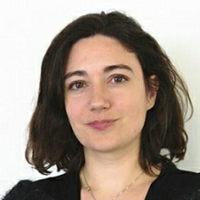
Perrine Paul-gilloteaux PhD
Biotechnology
Nantes, Pays De La Loire, France
Connect with the speaker?
Paul-Gilloteaux was working on the tracking of deformations of the brain during craniotomy in brain surgery, in order to relocate information from different exams of the patient, in particular, indicated functional areas, such as language or motor area of the brain and to display them in the surgical microscope. For this, she was creating stereoscopic reconstruction from the surgical microscope binocular, and she developed a new method for the tracking of surface deformation, based on a hybrid approach of point cloud registration and video tracking.
She did her first postdoc as an experienced Researcher in a Marie-Curie network, ARIS*ER to work on augmented reality in surgery, and in particular, the segmentation of tumors in ultrasound-based on wavelet analysis of the ultrasound raw signal.
She then got a post-doc position in Maynooth, Ireland (close to Dublin), in the Hamilton Institute which is an applied mathematics institute. I was in the Systems Biology group, where She has developed with her colleagues an intelligent fluorescent microscope, taking the decision of the area to image and of the frequency of acquisition, based on real time analysis of the image content (cell segmentation and cell tracking).
In 2010, she joined the CNRS as Research Engineer in the PICT IBISA cell and tissue microscopy facility in Institut Curie, Paris, France. Her job was to support the biologists in image analysis, by adapting existing software or developing new methods.
She did her first postdoc as an experienced Researcher in a Marie-Curie network, ARIS*ER to work on augmented reality in surgery, and in particular, the segmentation of tumors in ultrasound-based on wavelet analysis of the ultrasound raw signal.
She then got a post-doc position in Maynooth, Ireland (close to Dublin), in the Hamilton Institute which is an applied mathematics institute. I was in the Systems Biology group, where She has developed with her colleagues an intelligent fluorescent microscope, taking the decision of the area to image and of the frequency of acquisition, based on real time analysis of the image content (cell segmentation and cell tracking).
In 2010, she joined the CNRS as Research Engineer in the PICT IBISA cell and tissue microscopy facility in Institut Curie, Paris, France. Her job was to support the biologists in image analysis, by adapting existing software or developing new methods.
EVENTS & ACTIVITIES (Speaking, Spoken, and Authored)


Quick Links
Connect With Us


Awards & Recognitions


- 50 Division Street, Suite 501,
- Somerville, NJ 08876
- support@emedevents.com