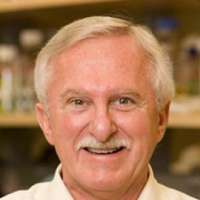
Paul L. Modrich PhD
Biochemistry and Molecular Genetics
Durham, North Carolina, United States of America
Connect with the speaker?
Dr. Paul L. Modrich, Ph.D. is a Professor of Biochemistry at Duke University Medical Center. He received his BS degree in Biology from MIT in 1968 and his Ph.D. in Biochemistry from Stanford University in 1973, where he studied with me. Robert Lehman. After a postdoctoral fellowship with Charles C. Richardson at Harvard Medical School, he joined the Department of Chemistry at UC Berkeley in 1974 as an assistant professor. In 1976 he was recruited to the Department of Biochemistry at Duke, where he has been a faculty member for 40 years.
Dr. Modrich clarified the nature and functions of mismatch repair, which rectifies base-pairing errors within the DNA helix. Although a mismatched base pair is a rare occurrence in the DNA helix, inactivation of this DNA repair system has profound consequences for a living cell, a 100- to 1,000-fold increase in mutation production. Dr. Modrich established the mechanism of mismatch repair in the bacterium E. coli, and more recently the mechanism by which mismatches are corrected in human cells. He demonstrated that tumor cells with microsatellite instability, including those from patients with the common hereditary cancer Lynch syndrome, are defective in mismatch repair, and he identified the repair components that are lacking in these cells. He also showed that mismatch repair plays an important role in the cellular response to certain types of DNA damage and that as a consequence of this function, mismatch repair-defective cancer cells are resistant to certain chemotherapeutic drugs.
Dr. Modrich is a recipient of the 2015 Nobel Prize in Chemistry, the Pfizer Award in Enzyme Chemistry, the Feodor Lynen Medal, the General Motors Mott Prize in Cancer Research, the Pasarow Foundation Award in Cancer Research, and the American Cancer Society Medal of Honor. He is a member of the National Academy of Sciences, the Institute of Medicine, and the American Academy of Arts and Sciences.
Dr. Modrich clarified the nature and functions of mismatch repair, which rectifies base-pairing errors within the DNA helix. Although a mismatched base pair is a rare occurrence in the DNA helix, inactivation of this DNA repair system has profound consequences for a living cell, a 100- to 1,000-fold increase in mutation production. Dr. Modrich established the mechanism of mismatch repair in the bacterium E. coli, and more recently the mechanism by which mismatches are corrected in human cells. He demonstrated that tumor cells with microsatellite instability, including those from patients with the common hereditary cancer Lynch syndrome, are defective in mismatch repair, and he identified the repair components that are lacking in these cells. He also showed that mismatch repair plays an important role in the cellular response to certain types of DNA damage and that as a consequence of this function, mismatch repair-defective cancer cells are resistant to certain chemotherapeutic drugs.
Dr. Modrich is a recipient of the 2015 Nobel Prize in Chemistry, the Pfizer Award in Enzyme Chemistry, the Feodor Lynen Medal, the General Motors Mott Prize in Cancer Research, the Pasarow Foundation Award in Cancer Research, and the American Cancer Society Medal of Honor. He is a member of the National Academy of Sciences, the Institute of Medicine, and the American Academy of Arts and Sciences.
EVENTS & ACTIVITIES (Speaking, Spoken, and Authored)


Quick Links
Connect With Us


Awards & Recognitions


- 50 Division Street, Suite 501,
- Somerville, NJ 08876
- support@emedevents.com