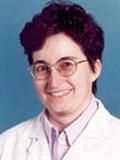
Martine Extermann
Oncology
Tampa, Florida, United States of America
Connect with the speaker?
Dr. Extermann, of the H. Lee Moffitt Cancer Center & Research Institute at the University of South Florida, is the recipient of the 2009 B. J. Kennedy Award and Lecture for Scientific Excellence in Geriatric Oncology.
A native of Switzerland, Dr. Extermann earned her medical and doctorate degrees from the University of Geneva. In 1994, she came to Moffitt Cancer Center to focus her research efforts on geriatric oncology in a fellowship program led by Lodovico Balducci, MD, the inaugural recipient of the B. J. Kennedy Award.
Dr. Extermann, in an interview with ASCO Daily News, described geriatric oncology as a field with many incentives. “Treating older patients is very rewarding and very diverse. I like the complexity. You need to be a smart doctor to do geriatric oncology, and you need to be able to pay attention to all aspects of the patient,” she said. “The patients have extraordinary life stories — I love the variety of life trajectories these patients have, and they really have… a history.”
She believes the field is ripe for innovation. “Geriatric oncology is a bit like the Alps in the nineteenth century: you can pick any summit you wish, and you’ll be the first one climbing it,” she said.
Dr. Extermann’s lecture “Geriatric Oncology: The Ultimate Personalized Care,” will emphasize what she calls “both sides of the equation” — the importance of the individual patient’s condition and comorbidities along with a better definition of the tumor biology and microenvironment.Geriatric oncology is extremely well placed for such personalization “because the more we age, the more diverse we are. The biology of aging and the biology of cancer have a lot of interaction,” she said.
Dr. Extermann has made significant contributions to the field of geriatrics. Working with a team of investigators from Lyon, France, she demonstrated that older European patients with cancer were as willing as older American patients to undergo chemotherapy, a fact, she said, that was “not obvious to European doctors and [the] public — including me — before I came to the United States,” she noted. Her research also has shown that older patients re-ceiving chemotherapy experience side effects but usually remain quite able to function throughout their treatment, a study that received significant attention in lay media.
Other previous research projects have suggested that performing a geriatric assessment improves the care of older patients with cancer. In addition, such an assessment can predict the complications of chemotherapy and can demonstrate that function, in geriatric terms (activities of daily living [ADL] and instrumental ADL), is independent of comorbidity and performance status. Dr. Extermann also has been involved in the establishment of guidelines for the treatment and the assessment of older patients with cancer.
Her current research explores the feasibility of developing a chemotherapy toxicity risk-assessment score for older patients with cancer, which could assist oncologists in making treatment decisions, and she is examining the interaction of diabetes with colorectal cancer treatment; study results should be available later this year. Her important work has helped improve the lives of older patients with cancer, and Dr. Extermann has earned the respect of her colleagues, including 2007 B.J. Kennedy Award recipient Dr. Balducci. “Dr. Extermann is the soul of our research program,” he said in an interview withASCO Daily News. “I don’t know if we could have accomplished what we have accomplished without her. Besides being great friends, our scientific cooperation could not be better.”
Dr. Balducci also recognized Dr. Extermann’s “humanitarian inspiration. For her, medicine — especially geriatric oncology — is a mission, in the sense of having a call. That sense of mission is substantiated by her faith — that we are in this world not for ourselves, but to make this world better, and I believe she has certainly made the world better.”
As President of the International Society of Geriatric Oncology, Dr. Extermann is leading the effort to improve cancer care for older patients around the world. “My main initiative is to assess, with all of our national representatives, 10 priorities that must be addressed in the next 3 to 5 years on a worldwide scale to improve the care of older patients,” she said.
International aspects of geriatric oncology will continue to grow in the future, she noted, especially in developing countries. According to Dr. Extermann, “[Twenty] years from now, we will actually have more people 65 and older in India than in the United States — 80 million in India and 60 million in the United States.” Adequate health care support and resources in nations like India will be crucial.
There are many challenges that must be overcome, and as she looks to future research and patient care, Dr. Extermann is grateful for the recognition from ASCO and the John A. Hartford Foundation. “I am very honored by the B. J. Kennedy Award,” she said, “and I will try to continue to be worthy of it.”
A native of Switzerland, Dr. Extermann earned her medical and doctorate degrees from the University of Geneva. In 1994, she came to Moffitt Cancer Center to focus her research efforts on geriatric oncology in a fellowship program led by Lodovico Balducci, MD, the inaugural recipient of the B. J. Kennedy Award.
Dr. Extermann, in an interview with ASCO Daily News, described geriatric oncology as a field with many incentives. “Treating older patients is very rewarding and very diverse. I like the complexity. You need to be a smart doctor to do geriatric oncology, and you need to be able to pay attention to all aspects of the patient,” she said. “The patients have extraordinary life stories — I love the variety of life trajectories these patients have, and they really have… a history.”
She believes the field is ripe for innovation. “Geriatric oncology is a bit like the Alps in the nineteenth century: you can pick any summit you wish, and you’ll be the first one climbing it,” she said.
Dr. Extermann’s lecture “Geriatric Oncology: The Ultimate Personalized Care,” will emphasize what she calls “both sides of the equation” — the importance of the individual patient’s condition and comorbidities along with a better definition of the tumor biology and microenvironment.Geriatric oncology is extremely well placed for such personalization “because the more we age, the more diverse we are. The biology of aging and the biology of cancer have a lot of interaction,” she said.
Dr. Extermann has made significant contributions to the field of geriatrics. Working with a team of investigators from Lyon, France, she demonstrated that older European patients with cancer were as willing as older American patients to undergo chemotherapy, a fact, she said, that was “not obvious to European doctors and [the] public — including me — before I came to the United States,” she noted. Her research also has shown that older patients re-ceiving chemotherapy experience side effects but usually remain quite able to function throughout their treatment, a study that received significant attention in lay media.
Other previous research projects have suggested that performing a geriatric assessment improves the care of older patients with cancer. In addition, such an assessment can predict the complications of chemotherapy and can demonstrate that function, in geriatric terms (activities of daily living [ADL] and instrumental ADL), is independent of comorbidity and performance status. Dr. Extermann also has been involved in the establishment of guidelines for the treatment and the assessment of older patients with cancer.
Her current research explores the feasibility of developing a chemotherapy toxicity risk-assessment score for older patients with cancer, which could assist oncologists in making treatment decisions, and she is examining the interaction of diabetes with colorectal cancer treatment; study results should be available later this year. Her important work has helped improve the lives of older patients with cancer, and Dr. Extermann has earned the respect of her colleagues, including 2007 B.J. Kennedy Award recipient Dr. Balducci. “Dr. Extermann is the soul of our research program,” he said in an interview withASCO Daily News. “I don’t know if we could have accomplished what we have accomplished without her. Besides being great friends, our scientific cooperation could not be better.”
Dr. Balducci also recognized Dr. Extermann’s “humanitarian inspiration. For her, medicine — especially geriatric oncology — is a mission, in the sense of having a call. That sense of mission is substantiated by her faith — that we are in this world not for ourselves, but to make this world better, and I believe she has certainly made the world better.”
As President of the International Society of Geriatric Oncology, Dr. Extermann is leading the effort to improve cancer care for older patients around the world. “My main initiative is to assess, with all of our national representatives, 10 priorities that must be addressed in the next 3 to 5 years on a worldwide scale to improve the care of older patients,” she said.
International aspects of geriatric oncology will continue to grow in the future, she noted, especially in developing countries. According to Dr. Extermann, “[Twenty] years from now, we will actually have more people 65 and older in India than in the United States — 80 million in India and 60 million in the United States.” Adequate health care support and resources in nations like India will be crucial.
There are many challenges that must be overcome, and as she looks to future research and patient care, Dr. Extermann is grateful for the recognition from ASCO and the John A. Hartford Foundation. “I am very honored by the B. J. Kennedy Award,” she said, “and I will try to continue to be worthy of it.”
EVENTS & ACTIVITIES (Speaking, Spoken, and Authored)


Quick Links
Connect With Us


Awards & Recognitions


- 50 Division Street, Suite 501,
- Somerville, NJ 08876
- support@emedevents.com