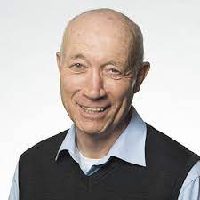
Klaus Apel PhD
Biochemistry and Molecular Genetics
Zurich, Zurich, Switzerland
Connect with the speaker?
Klaus’ scientific career is exemplary in many respects, but it is probably his constant drive to develop and adapt tools/experimental models to bring his research to a frontier that best epitomizes his passionate stance on science. This started early on with his Ph.D. work, conducted at the Max Planck Institute for Cell Biology in Wilhelmshaven, where he could demonstrate that some chloroplast proteins were under the influence of nuclear DNA. This rather novel concept at the time emerged mostly as a consequence of his choice to use the single-celled alga Acetabularia as a model because nuclei can be swapped between the different species of the algae. He later used these techniques extensively, first at the University of Freiburg, to investigate phytochromes, and then as the Chair of Botany at the University of Kiel, where he made important contributions to the understanding of flowering time, the toxicity of certain seed proteins, and senescence.
EVENTS & ACTIVITIES (Speaking, Spoken, and Authored)


Quick Links
Connect With Us


Awards & Recognitions


- 50 Division Street, Suite 501,
- Somerville, NJ 08876
- support@emedevents.com