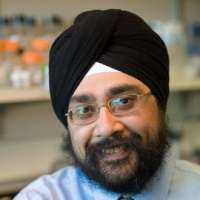
Harmit S. Malik PhD
Genetics, Molecular Biology
Chevy Chase, Maryland, United States of America
Connect with the speaker?
Harmit Malik got his Bachelors in Technology in Chemical Engineering at the Indian Institute of Technology, Mumbai, India. There, he became interested in molecular biology due to Prof. K. K. Rao and in evolution by reading Richard Dawkins' "The Selfish Gene." He then moved to the US to get his Ph.D. in Biology, at the University of Rochester, NY, under the mentorship of Prof. Thomas Eickbush, to work on the evolution of retrotransposable elements. In 1999, he moved to Seattle to the Fred Hutchinson Cancer Research Center (the "Hutch"), to do his postdoc with Dr. Steve Henikoff on the evolution of centromeres and centromeric proteins. In 2003, he started his own lab at the Hutch, where he has been ever since. Together with his colleague Michael Emerman, Malik and his trainees have used an evolutionary lens to dissect and discover both primate antiviral as well as viral adaptation strategies. By taking advantage of viral "fossils" in animal genomes and intense episodes of ancient host gene adaptation, his work has helped found the field of Paleobiology. In 2009, he was awarded an Early Career Scientist of the Howard Hughes Medical Institute and a Full Investigator in 2013. Most recently, he was awarded the 2017 Eli Lilly Prize in Microbiology, the most prestigious prize awarded by the American Society of Microbiology.
EVENTS & ACTIVITIES (Speaking, Spoken, and Authored)
Cells vs. Pathogens: Intrinsic Defenses and Counterdefenses (C4)
 In-Person Event
 Infectious Disease ...
 Mar 23 - 26, 2018
 Monterey, California, USA
Annual Meeting of the International Cytokine and Interferon Society
- In-Person Event
- Cytopathology
- Oct 11 - 14, 2015
- Bamberg, Bayern, DE
29th International Papillomavirus Conference and Clinical & Public Health Workshops
- In-Person Event
- Infectious Disease
- Aug 21 - 25, 2014
- Seattle, Washington, USA
Quick Links
Connect With Us


Awards & Recognitions
- 50 Division Street, Suite 501,
- Somerville, NJ 08876
- support@emedevents.com