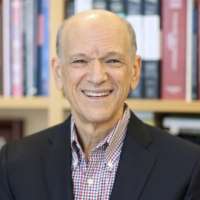
Eric J. Nestler MD, PhD
Psychiatry
New York, New York, United States of America
Connect with the speaker?
Dr. Eric J. Nestler, MD, PhD, is one of the world’s top neuroscientists, known for his research that revolutionized the understanding of the molecular basis of addiction and depression. Dr. Nestler was appointed Anne and Joel Ehrenkranz Dean of the Icahn School of Medicine at Mount Sinai in 2025. He also serves as the Chief Scientific Officer for the Mount Sinai Health System. He became the inaugural Director of The Friedman Brain Institute at Mount Sinai in 2008 and served in that position until 2025.
After receiving his BA, PhD, and MD from Yale University, Dr. Nestler completed his psychiatry residency at Yale in 1987. He rapidly ascended to Professor of Psychiatry and Neurobiology with tenure at Yale, where he was founding director of the Division of Molecular Psychiatry. In 2000, he moved to the University of Texas Southwestern Medical Center as Distinguished Professor and Chair of the Department of Psychiatry.
During his tenure as the Director of The Friedman Brain Institute, Dr. Nestler built the institution into a powerhouse of neuroscience research, attracting the best and brightest multidisciplinary teams. Under his leadership, the Institute received substantial grant funding—including robust support from the National Institutes of Health—cementing Mount Sinai as a global leader for research on a wide range of neurological and psychiatric diseases.
Dr. Nestler’s most significant contribution to neuroscience is his research on molecular mechanisms that regulate gene expression in response to drugs of abuse or stress. By identifying specific transcriptional and epigenetic mechanisms—including the molecular switch ΔFOSB—he revealed how these conditions fundamentally rewire the brain. For millions suffering from treatment-resistant depression or struggling with addiction, these findings are being translated into tangible benefits: establishing new platforms for the discovery of more effective treatments for depression and addiction, including those that consider biological sex differences in response to medications. Dr. Nestler’s work on the biological basis of stress resilience created a seismic shift in psychiatric treatment approaches. His findings moved the field from merely managing symptoms toward targeting the roots of these disorders and preventing them altogether.
Throughout his career, Dr. Nestler has been an advocate for integrating science with clinical practice. He fostered collaboration across disciplines, broke down traditional silos, and accelerated discovery and innovation. His leadership helped to establish new research departments and initiatives at Mount Sinai, including programs in regenerative medicine, genomics, artificial intelligence, and health equity research. He is also regarded for his commitment to mentorship. His influence on early-career scientists and clinicians earned him the Julius Axelrod Prize for Mentorship from the American College of Neuropsychopharmacology.
EVENTS & ACTIVITIES (Speaking, Spoken, and Authored)
Transcriptional & Epigenetic Mechanisms of Depression
 Webcast
 Psychiatry
 Mar 21, 2019 - Mar 21, 2021
Society of Biological Psychiatry 73rd Annual Scientific Meeting
 In-Person Event
- Psychiatry
- May 10 - 12, 2018
 New York City, New York, USA
Neuroepigenetics and Neuroepitranscriptomics Conference 2018
- In-Person Event
- Biochemistry and Molecular Genetics
- Feb 24 - 27, 2018
- Cancun, Quintana Roo, MX
Stress, PTSD and Psychiatric Disorders: From Basic Science to Therapeutic Intervention
- In-Person Event
- Neurology ...
- May 03 - 04, 2015
- Rehovot, Ha Merkaz, IL

Connect With Us


Awards & Recognitions


- 50 Division Street, Suite 501,
- Somerville, NJ 08876
- support@emedevents.com