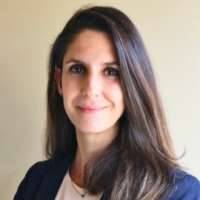
Elsa Sanchez-lopez PhD
Cell and Developmental Biology, Molecular Biology
La Jolla, California, United States of America
Connect with the speaker?
Dr. Elsa Sanchez-Lopez has over 10 years of research experience in the fields of inflammation and molecular mechanisms of disease, with significant scientific contributions evidenced by authorship on more than 30 peer-reviewed publications in high-impact journals. Her research expertise includes the characterization and evaluation of animal models and the identification of molecular pathways regulating inflammatory processes. Through this work, she has identified potential therapeutic targets, is the inventor of two patents, and has provided key preclinical evidence supporting the evaluation of several compounds in human Phase I clinical trials.
Dr. Sanchez-Lopez obtained her Bachelor’s degree in Biology from Universidad Complutense de Madrid in 2001. After completing specialized training at the Biochemistry Institute and the Medicinal Chemistry Institute of the Spanish National Research Council (CSIC), she joined the Ph.D. program in Biochemistry at the School of Medicine, Universidad Autónoma de Madrid, in 2003. She earned her Ph.D. in Biochemistry and Molecular Biology in the laboratory of Dr. Jesús Egido, completing three research projects that received Outstanding Cum Laude recognition and the Extraordinary Doctoral Thesis Award from Universidad Autónoma de Madrid in 2008 and 2009, respectively.
Following her doctoral training, Dr. Sanchez-Lopez conducted postdoctoral research in the laboratory of Dr. Juan Carlos Lacal, where she gained expertise in experimental cancer models and phospholipid metabolism. In 2012, supported by a prestigious Sara Borrell Fellowship, she joined the laboratory of Dr. Michael Karin at the Department of Pharmacology, University of California, San Diego, a world-leading center in inflammation and tumor immunology research.
During her time in Dr. Karin’s laboratory, Dr. Sanchez-Lopez investigated how modulation of the tumor microenvironment, including macrophages, TH17 cells, myeloid nurse-like cells, and plasma cells, affects cancer initiation and progression. This work resulted in multiple high-impact publications and contributed to the initiation of clinical trials, including FDA approval to begin a clinical trial in 2019. Through this research, she developed extensive expertise in macrophage biology, identifying both positive and negative regulators of the NLRP3 inflammasome and the production of the key inflammatory cytokines IL-1β and IL-18.

Connect With Us


Awards & Recognitions


- 50 Division Street, Suite 501,
- Somerville, NJ 08876
- support@emedevents.com