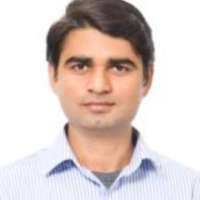
Dharmendra Yadav PhD
Biochemistry and Molecular Genetics
Icheon, Seoul, South Korea
Connect with the speaker?
Dr. Dharmendra Kumar Yadav has completed his Ph.D degree in Biological Science from CSIR-Central Institute of Medicinal and Aromatic Plants Lucknow India, postdoctoral studies from Hanyang University Korea, and University of Delhi, India. Presently, he is working as an Assistant Professor and Principal Investigator of the NRF project (Korean Government) in the College of Pharmacy at Gachon University Korea. He received the Young Scientist award from the Science and Engineering Research Board, New Delhi. He had worked as a Young Scientist at the All India Institute of Medical Science in Jodhpur, India. He has published more than 150 papers in reputed journals, 03 Book Chapters, and a Patent. He is continuing his research in atomic-level molecular simulation of Plasma Medicine, Computer-Aided Drug Design and Molecular Modelling of Biological networks, etc. He is also a member of several scientific societies and academic bodies.
Dr. Dharmendra Kumar Yadav's research interests include computer simulations of the plasma chemistry inside the plasma jet, and its interaction with a liquid medium, by 0D chemical kinetics models and 2D fluid models, as well as the interaction of reactive plasma species with biomolecules, like DNA, proteins, and phospholipids in the plasma membrane of cells, using molecular dynamics simulations or DFT-based methods, to better understand the underlying mechanisms of plasma medicine, to be able to improve the applications. We are also interested in plasma medicine, focusing mainly on plasma for cancer treatment. We perform experiments with a plasma jet on various types of cancer cells, both by direct treatment and indirect treatment by the plasma-activated medium. These experiments are in collaboration with the group Kwangwoon University (EH. Choi, Director of Plasma Bioscience Research Center/PDP Research Center). We are also interested in developing novel in silico predictive QSAR models for genome/proteome-wide identification of functionally conserved DNA and protein motifs through the application of statistical and machine learning approaches.
Dr. Dharmendra Kumar Yadav's research interests include computer simulations of the plasma chemistry inside the plasma jet, and its interaction with a liquid medium, by 0D chemical kinetics models and 2D fluid models, as well as the interaction of reactive plasma species with biomolecules, like DNA, proteins, and phospholipids in the plasma membrane of cells, using molecular dynamics simulations or DFT-based methods, to better understand the underlying mechanisms of plasma medicine, to be able to improve the applications. We are also interested in plasma medicine, focusing mainly on plasma for cancer treatment. We perform experiments with a plasma jet on various types of cancer cells, both by direct treatment and indirect treatment by the plasma-activated medium. These experiments are in collaboration with the group Kwangwoon University (EH. Choi, Director of Plasma Bioscience Research Center/PDP Research Center). We are also interested in developing novel in silico predictive QSAR models for genome/proteome-wide identification of functionally conserved DNA and protein motifs through the application of statistical and machine learning approaches.
Quick Links
Connect With Us


Awards & Recognitions


- 50 Division Street, Suite 501,
- Somerville, NJ 08876
- support@emedevents.com