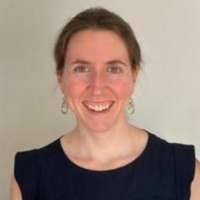
Claire Riggs PhD
Connect with the speaker?
Claire Riggs, Ph.D. particularly motivated by what we can learn from organisms that have evolved in environments uninhabitable by humans. Claire Riggs Ph.D. work focused on the role of small non-coding RNAs (such as microRNAs) in vertebrate species capable of surviving without oxygen (anoxia). Claire Riggs primarily worked on the annual killifish Austrofundulus Linnaeus, which inhabits temporary ponds in South America and relies on the embryos’ tolerance of extreme environmental conditions for the species to persist. Claire Riggs's current research focuses on the stress response at the cellular level, using both human and killifish cells. Claire Riggs studied stress-induced membrane-less organelles, stress granules, and processing bodies, which may regulate gene expression during stress. Claire Riggs is excited by the potential for transformative discoveries that comes from working on non-traditional model organisms and at the intersection of comparative physiology and cellular biology.
Claire Riggs teaches courses at the organismal and cellular levels. In Claire Riggs's classes, Claire Riggs aims to provide space for students to step back and be amazed by the natural world, including opportunities for students to pursue their own interests within the course topic. Claire Riggs hopes to stimulate a depth and breadth of understanding of the natural world and to equip students with the skills and practice of thinking like a biologist.
Claire Riggs teaches courses at the organismal and cellular levels. In Claire Riggs's classes, Claire Riggs aims to provide space for students to step back and be amazed by the natural world, including opportunities for students to pursue their own interests within the course topic. Claire Riggs hopes to stimulate a depth and breadth of understanding of the natural world and to equip students with the skills and practice of thinking like a biologist.
Quick Links
Connect With Us


Awards & Recognitions


- 50 Division Street, Suite 501,
- Somerville, NJ 08876
- support@emedevents.com