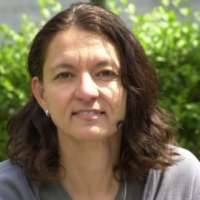
Christiana Nostlinger PhD
Clinical Psychology
Antwerp, Antwerp, Belgium
Connect with the speaker?
Christiana Nostlinger was trained as a clinical and health psychologist at the University of Vienna and completed her PhD in 1989. She obtained a postdoctoral fellowship to specialize in behavioral and psychosexual research at the HIV-Center for Clinical and Behavioral Studies, Columbia University (New York).
Nostlinger was a professor of Clinical and Health Psychology at the University of Vienna between 2016-2018. Before she held various positions as a clinical psychologist, researcher, and lecturer, and worked as a consultant to various European and international organizations in Austria, Switzerland, and the Netherlands. Since 2005 she has worked at ITM, leading several social science research projects. This has included the social science component of research on pre_exposure Prophylaxis (PrEP), scientific coordination of the Euro support projects (Euro support projects 4-6), leading the evaluation work package of the European Joint Action "Quality Action: Improving the Quality of HIV Prevention in Europe", and the prevention work-package of Sialon II (all funded through the European Public Health Projects funded by the European Public Health Programme/CHAFEA). She developed and evaluated HIV prevention projects in the South (e.g. Kenya, Uganda) targeting adolescents living with HIV. She is also the coordinator of the Flemish Programme "HIV prevention and sexual health promotion for sub-Saharan African migrants living in Flanders" (commissioned by the Flemish Ministry of Public Health, Well-being and the Family).
Nostlinger area of expertise relates to social science and behavioral research on human (sexual) health behavior and its contextual components, such as lifestyle-related health issues (gender and health, sexual and reproductive health, health promotion for key populations such as migrants, young people and men having sex-with-men, particularly in the field of sexual health and HIV/AIDS). She is experienced in developing, implementing, and evaluating health behavior interventions using an evidence-based, theory-guided, and systematic approach. She works with community-based, participatory research approaches and with both qualitative and quantitative research methods.
Nostlinger was a professor of Clinical and Health Psychology at the University of Vienna between 2016-2018. Before she held various positions as a clinical psychologist, researcher, and lecturer, and worked as a consultant to various European and international organizations in Austria, Switzerland, and the Netherlands. Since 2005 she has worked at ITM, leading several social science research projects. This has included the social science component of research on pre_exposure Prophylaxis (PrEP), scientific coordination of the Euro support projects (Euro support projects 4-6), leading the evaluation work package of the European Joint Action "Quality Action: Improving the Quality of HIV Prevention in Europe", and the prevention work-package of Sialon II (all funded through the European Public Health Projects funded by the European Public Health Programme/CHAFEA). She developed and evaluated HIV prevention projects in the South (e.g. Kenya, Uganda) targeting adolescents living with HIV. She is also the coordinator of the Flemish Programme "HIV prevention and sexual health promotion for sub-Saharan African migrants living in Flanders" (commissioned by the Flemish Ministry of Public Health, Well-being and the Family).
Nostlinger area of expertise relates to social science and behavioral research on human (sexual) health behavior and its contextual components, such as lifestyle-related health issues (gender and health, sexual and reproductive health, health promotion for key populations such as migrants, young people and men having sex-with-men, particularly in the field of sexual health and HIV/AIDS). She is experienced in developing, implementing, and evaluating health behavior interventions using an evidence-based, theory-guided, and systematic approach. She works with community-based, participatory research approaches and with both qualitative and quantitative research methods.
Quick Links
Connect With Us


Awards & Recognitions

- 50 Division Street, Suite 501,
- Somerville, NJ 08876
- support@emedevents.com