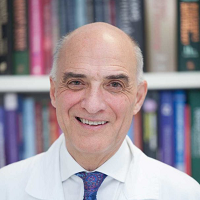
Brunangelo Falini MD
Haematology, Internal Medicine
Perugia, Umbria, Italy
Connect with the speaker?
Dr. Brunangelo Falini is the head of the Institute of Hematology at the Medical School of Perugia University, Perugia, Italy. He received an M.D. degree and completed his residency in Internal Medicine at the University of Perugia. Then, he trained for one year (1980-1981) with Robert J. Lukes on the immunological classification of human lymphomas at the University of Southern California, Los Angeles, and worked for 2 years (1982-1984) with David Y. Mason on the generation of monoclonal antibodies against lymphoma- and leukemia-associated antigens at Oxford University.
During his scientific carrier, Prof. Falini made important contributions in the field of lymphomas and leukemias by generating novel monoclonal antibodies directed against proteins encoded by genes involved in chromosomal translocations, by contributing to developing the modern classifications of lymph-hemopoietic neoplasms (REAL and WHO), and by applying the first anti-CD30 immunotoxin for the therapy of refractory/relapsed Hodgkin lymphoma.
In the past 15 years, Prof. Falini made the seminal discoveries of nucleophosmin (NPM1) mutations in acute myeloid leukemia and BRAF-V600E mutation in hairy cell leukemia. By discovering NPM1 mutations, Prof. Falini not only identified a new mechanism of leukemogenesis based on the altered nucleo-cytoplasmic trafficking of NPM1 (a nucleolar protein) but successfully built on his findings to translate them into clinics, contributing to define a new disease category in the 2016-WHO classification of lympho-hemopoietic neoplasms and to demonstrate the value of NPM1 mutations in predicting the outcome of AML patients and in the monitoring of minimal residual disease. Thus, searching NPM1 mutations is currently recommended as a critical step in the molecular workup of acute myeloid leukemia patients. At present, Prof. Falini’s work is focused to understand how the NPM1 mutant causes leukemogenesis and in translating this information to develop new anti-leukemic agents.
During his scientific carrier, Prof. Falini made important contributions in the field of lymphomas and leukemias by generating novel monoclonal antibodies directed against proteins encoded by genes involved in chromosomal translocations, by contributing to developing the modern classifications of lymph-hemopoietic neoplasms (REAL and WHO), and by applying the first anti-CD30 immunotoxin for the therapy of refractory/relapsed Hodgkin lymphoma.
In the past 15 years, Prof. Falini made the seminal discoveries of nucleophosmin (NPM1) mutations in acute myeloid leukemia and BRAF-V600E mutation in hairy cell leukemia. By discovering NPM1 mutations, Prof. Falini not only identified a new mechanism of leukemogenesis based on the altered nucleo-cytoplasmic trafficking of NPM1 (a nucleolar protein) but successfully built on his findings to translate them into clinics, contributing to define a new disease category in the 2016-WHO classification of lympho-hemopoietic neoplasms and to demonstrate the value of NPM1 mutations in predicting the outcome of AML patients and in the monitoring of minimal residual disease. Thus, searching NPM1 mutations is currently recommended as a critical step in the molecular workup of acute myeloid leukemia patients. At present, Prof. Falini’s work is focused to understand how the NPM1 mutant causes leukemogenesis and in translating this information to develop new anti-leukemic agents.
EVENTS & ACTIVITIES (Speaking, Spoken, and Authored)


Quick Links
Connect With Us


Awards & Recognitions

- 50 Division Street, Suite 501,
- Somerville, NJ 08876
- support@emedevents.com