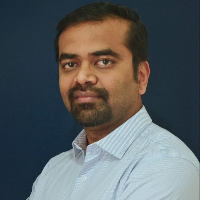
Anguraj Sadanandam PhD
Bioinformatics, Pathology
London, England, United Kingdom
Connect with the speaker?
Dr. Sadanandam is a Team Leader (Associate Professor) at the Institute of Cancer Research (ICR), London since 2013 (tenured – 2018) and is currently applying his multidisciplinary skills to an integrated science of systems biology to identify and test precise therapies for different subtypes of cancers using computational (artificial intelligence), experimental (including pre-clinical and in vivo models) and clinical (accessing clinical trial samples) biology.
Dr. Sadanandam obtained his Ph.D. in Pathology and Microbiology with a specialty in Bioinformatics from the University of Nebraska Medical Center, Omaha, Nebraska, USA (unique interdisciplinary program available at few places in the USA), where he combined both experimental and computational biology to identify and characterize metastatic biomarkers in pancreatic adenocarcinoma (PDA). There were a handful of such interdisciplinary researchers in cancer biology at that time.
Dr. Sadanandam did his postdoctoral fellowship with two world-renowned mentors: Joe Gray (Lawrence Berkeley National Lab) and Douglas Hanahan (Swiss Federale Institute of Lausanne, EPFL). He briefly worked at the Swiss Institute of Cancer.
Dr. Sadanandam led the research work to define transcriptome subtypes of colorectal cancer associated with prognosis and potential personalized medicine (Sadanandam et al., Nature Medicine 2013). This work, along with other groups, led to Colorectal Cancer Subtyping Consortium (CRCSC; Guinney et al., Nature Medicine 2015; Sadanandam as a co-senior author and Nyamundanda from Sadanandam lab as a co-first author).
He also recently developed prognostic signature and biomarker assay for perioperative chemotherapy-treated gastroesophageal cancer patients (Smyth et al., Annals of Oncology 2018); first patient-based cancer-associated fibroblast subtypes in pancreatic adenocarcinoma (Neuzillet et al., J. Pathology 2019; co-corresponding author); luminal heterogeneity associated with heterocellular phenotypes (Poudel et al., NPJ Breast Cancer); and colorectal cancer subtype assays (Ragulan et al., Nature Scientific Reports 2019).
Dr. Sadanandam obtained his Ph.D. in Pathology and Microbiology with a specialty in Bioinformatics from the University of Nebraska Medical Center, Omaha, Nebraska, USA (unique interdisciplinary program available at few places in the USA), where he combined both experimental and computational biology to identify and characterize metastatic biomarkers in pancreatic adenocarcinoma (PDA). There were a handful of such interdisciplinary researchers in cancer biology at that time.
Dr. Sadanandam did his postdoctoral fellowship with two world-renowned mentors: Joe Gray (Lawrence Berkeley National Lab) and Douglas Hanahan (Swiss Federale Institute of Lausanne, EPFL). He briefly worked at the Swiss Institute of Cancer.
Dr. Sadanandam led the research work to define transcriptome subtypes of colorectal cancer associated with prognosis and potential personalized medicine (Sadanandam et al., Nature Medicine 2013). This work, along with other groups, led to Colorectal Cancer Subtyping Consortium (CRCSC; Guinney et al., Nature Medicine 2015; Sadanandam as a co-senior author and Nyamundanda from Sadanandam lab as a co-first author).
He also recently developed prognostic signature and biomarker assay for perioperative chemotherapy-treated gastroesophageal cancer patients (Smyth et al., Annals of Oncology 2018); first patient-based cancer-associated fibroblast subtypes in pancreatic adenocarcinoma (Neuzillet et al., J. Pathology 2019; co-corresponding author); luminal heterogeneity associated with heterocellular phenotypes (Poudel et al., NPJ Breast Cancer); and colorectal cancer subtype assays (Ragulan et al., Nature Scientific Reports 2019).
EVENTS & ACTIVITIES (Speaking, Spoken, and Authored)


Quick Links
Connect With Us


Awards & Recognitions


- 50 Division Street, Suite 501,
- Somerville, NJ 08876
- support@emedevents.com