


OVERVIEW
VISTA: Protocols for Working With Tissues Around Teeth and Implants From the Creator is organized by OHI-S.
Description:
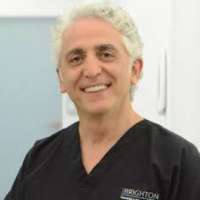
All the possibilities of using VISTA technique for soft tissue and bone augmentation, from its creator Homa Zadeh!
In the course, you will learn the techniques of:
- Periodontal plastic surgery
- Autogenous grafts
- Soft tissue and bone augmentation
- Modular bone plastic
- Socket augmentation.
You will analyze all the possibilities of using the VISTA technique in the treatment of periodontal and peri-implant tissue diseases. Additionally, you will learn about all the nuances of using PRF, membranes, and bone-substituting materials during plastic periodontal surgery and implantation.
After the course, you will receive a full set of necessary and relevant techniques for the treatment of periodontal diseases and alveolar ridge defects in any clinical situations.
Lesson 1.Surgical techniques for gingival recession treatment
– Gingival recession: indications for starting treatment
– Methods of periodontal plastic surgery:
- Coronally advanced flap
- Laterally closed tunnel
- Pinhole surgical technique
- Vestibular incision subperiosteal tunnel access (VISTA).
– VISTA access: indications and stages of treatment.
Recommended for: Periodontists, Implantologists, Oral and maxillofacial surgeons, General dentists.
Lesson 2.VISTA technique step-by-step protocol. Introductory lesson
– Risk factors in the treatment of gingival recessions
– Regeneration of gingival papillae: working methods
– Selection of material for VISTA access
– Advantages of VISTA Access
– Sampling of autogenic tissue from the area of the upper jaw hillock: the technique and its modifications
– VISTA technique: demonstration of the technique on a clinical example.
Recommended for: Periodontists, Implantologists, Oral and maxillofacial surgeons, General dentists.
Lesson 3.VISTA technique step-by-step protocol
– Risk factors in the treatment of gingival recessions
– Regeneration of gingival papillae: working methods
– Selection of material for VISTA access
– Advantages of VISTA Access
– Sampling of autogenic tissue from the area of the upper jaw hillock: the technique and its modifications
– VISTA technique: demonstration of the technique on a clinical example.
Recommended for: Periodontists, Implantologists, Oral and maxillofacial surgeons, General dentists.
Lesson 4.Soft tissue and bone augmentation techniques
– Gingival and peri-implant tissues: anatomical and histological differences
– Risk factors for gingival recession in the area of implants
– The value of the peri-implant mucosa
– Soft tissue augmentation techniques:
- Free gingival graft (FGG)
- Allograft/xenograft
- L-PRF
- Pedicle flap
- Vascularized inter-position (VIP) graft
- VISTA.
– The socket of the removed tooth: the phenotype and its clinical significance.
Recommended for: Periodontists, Implantologists, Oral and maxillofacial surgeons, General dentists.
Lesson 5.VISTA in complex clinical cases treatment
– Socket-Shield technique
– Use of PRF for immediate implantation
– The method of modular bone grafting
– Flap design
– The depth of the vestibule of the oral cavity: methods of correction
– VISTA methodology: aesthetic changes
– Total rehabilitation of the oral cavity in complex clinical examples.
Recommended for: Periodontists, Implantologists, Oral and maxillofacial surgeons, General dentists.
Lesson 6.Updated VISTA technique
– History of concepts for management of gingival recession defects
– Periodontal phenotype
– Review of classic surgical techniques for the treatment of periodontal diseases
– Advantages of VISTA technique
– Mucosal split-thickness vs mucosal full-thickness flap
– Significance of periodontal phenotype in long-term stability of periodontal tissues
– Decision making on when phenotype modification therapy is necessary and whether augmentation of mucosa and/or alveolar bone augmentation is needed
– The VISTA protocol for phenotype modification therapy.
Recommended for: Periodontists, Implantologists, Oral and maxillofacial surgeons, General dentists.
Lesson 7.Clinical options of VISTA technique
– Material selection:
- Connective tissue (palate and tuberosity)
- Acellular dermis allograft
- Collagen matrix xenograft
- Platelet-fibrin concentrates
- Growth factors.
– Step-by-step video demonstrations of VISTA technique
– Interdisciplinary approach to complex case treatment.
Recommended for: Periodontists, Implantologists, Oral and maxillofacial surgeons, General dentists.
Lesson 8.Bone augmentation: material selection and treatment planning
– ABC classification
– Risk assessment and classification
– Material selection
– Types of membranes, their differences and functions
– Flap management for effective ridge augmentation
– Tent-pole technique.
Recommended for: Periodontists, Implantologists, Oral and maxillofacial surgeons, General dentists.
Lesson 9.Improving the predictability of alveolar ridge augmentation
– Autogenic bone tissue
– Bone augmentation and graft stabilization
– The effectiveness of perforation of the cortical bone in bone augmentation
– Bone demineralization
– ABC classification of maxilla lateral areas
– Autogenic bone tissue sampling technique
– Vestibular and soft tissue management
– Tunnel vs flap access
– Application of VISTA technique
– Complications: recognition and management.
Recommended for: Periodontists, Implantologists, Oral and maxillofacial surgeons, General dentists.
ALL OHI-S ONLINE COURSES ARE DISCOUNTS:
- 20% for residents
- 20% for students and interns
ACCREDITATION & CREDITS

Total CE credits: 5.75
This continuing education activity has been planned and implemented in accordance with the standards of the ADA Continuing Education Recognition Program (ADA CERP).
ADA CERP is a service of the American Dental Association to assist dental professionals in identifying quality providers of continuing dental education. ADA CERP does not approve or endorse individual courses or instructors, nor does it imply acceptance of credit hours by boards of dentistry.
Concerns or complaints about a CE provider may be directed to the provider or to the Commission for Continuing Education Provider Recognition
TARGET AUDIENCE
DentistPeriodontistsOral and Maxillofacial SurgeonsImplantologistsSPECIALITIES
Dentistry
Download eMedEvents Mobile App
Track your CE certificates and CME requirements anytime, anywhere.



Quick Links