


OVERVIEW
Kois Principles for Digital Planning of Prosthetic and Orthodontic Treatment is organized by OHI-S.
Total Lecture Time: 6h 41min
Description:
On the course you will learn how to work in the Kois principle:
Create a perfect Digital Smile design considering:
- dental parameters
- facial driven features
- gingival parameters.
Orthodontic treatment with Clear Aligners according to Digital smile design
Create functional restorations on natural teeth and implants in a digital protocol.
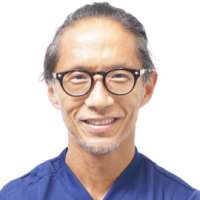
The lecturer, Dr. Tak On Tse Ryan, is a Kois mentor.
Lesson 1. Smile design. Principles and sequence according to the Kois principles. Introductory lesson
– What information is required for the Smile Design? Parameters to be considered for Smile Design
– Lip dynamics and incisal edge position
– Etiology, clinical feature, diagnosis, and treatment of gingival smile
– Tooth proportion measurement tools
– Closed lengthening of the tooth crown with a laser
– Duchenne smile as a tool for the dynamics of the position of the upper lip and the canine exposure determination
– 6 stages of smile planning according to John Kois and Frank Speer
– The rule for assessing the position of the incisors "4\2\2" from Edward McLaren
– Golden Ratio for face proportions estimation
– Landmarks to create an approximal contact between the central incisors
– Phonetic analysis.
Recommended for: Prosthodontists, Orthodontists, General dentists.
Lesson 2.Smile design. Principles and sequence according to the Kois principles
– What information is required for the Smile Design? Parameters to be considered for Smile Design
– Lip dynamics and incisal edge position
– Etiology, clinical feature, diagnosis, and treatment of gingival smile
– Tooth proportion measurement tools
– Closed lengthening of the tooth crown with a laser
– Duchenne smile as a tool for the dynamics of the position of the upper lip and the canine exposure determination
– 6 stages of smile planning according to John Kois and Frank Speer
– The rule for assessing the position of the incisors "4\2\2" from Edward McLaren
– Golden Ratio for face proportions estimation
– Landmarks to create an approximal contact between the central incisors
– Phonetic analysis
– Integration of the midline with the occlusal plane and the interincisal midline on the model. Transferring data to the laboratory
– Algorithm: how to calculate the crown height increase
– Analysis of clinical cases.
Recommended for: Prosthodontists, Orthodontists, General dentists.
Lesson 3. Facial Analysis and Smile Design based on DSD and Kois Principle
– Dental parameters. Fundamental objective criteria
– The position of the gingival zenith and the level of the maxillary frontal teeth
– The rule "50:40:30"
– Factors affecting the shape of the tooth
– Registration and transfer of the midline position to plaster models. Protocol of working with the "Ditramax" device
– Protocol for working with the John Kois dentofacial analyzer
– Requirements for DSD photography
– Sequential 6 steps of DSD protocol
– Combined use of the Kois dentofacial analyzer and DSD
– Working with the gingival margin level in DSD
– Lengthening of the crown part of the teeth in digital protocol
– VISTA technique and modified fibrin-associated recession closure technique
– The midline of the face. The concept of smooth facial contours
– Determining the shape of the anterior teeth during DSD, taking into account the anthropometric parameters of the patient. Morphopsychology
– Color and optical properties of the teeth
– Lip volume. Assessment of objective parameters and their correction.
Recommended for: Prosthodontists, Orthodontists, General dentists.
Lesson 4. Occlusion Principle in Full mouth rehabilitation under Kois Principle
– Terminology:
- Maximal intercuspal position (MIP)
- Central relation (CR)
- Vertical dimension of occlusion (VDO).
– Gnathologic principles
– Condylar movements: Bennet movement, Bennet angle
– Anterior guidance
– Dynamic system: variability and adaptation
– Physiologic occlusion
– Acceptable functions: chewing, swallowing, speaking and breathing
– Constricted chewing patterns
– Occlusal dysfunction and parafunctions
– Three P's according to the Kois principles: Position, Place, Paceway
– Transferring the emergence profile of multiple implant restoration
– Kois questionnaire
– Risk assessment: occlusion stress test
– Functional occlusion therapeutic considerations
– Central relation technique:
- Bilateral manipulation
- Lucia jig
- Leaf gauge
- Kois deprogrammer
- Bite plane
- Occlusal splint.
– Characteristics of Kois deprogrammer
– Benefits of a Kois deprogrammer.
Recommended for: Prosthodontists, Orthodontists, General dentists.
Lesson 5.Digital orthodontics in functional esthetics
– Minimal invasive dentistry
– Invisalign® principle
– Central occlusion and functional overjet
– Acceptable function and aberrant adaptive envelopes
– Constricted chewing pattern
– 3 features for functional diagnosis: Kois questionnaire, clinical examination, the mounted cast after Kois deprogrammer
– Choosing a method for malocclusion treatment
– DSD in orthodontic treatment planning. Clincheck usage
– Correction of X-bite and tilted midline
– Intrusion and retraction of lower incisors
– Invisalign® tooth movement.
Recommended for: Prosthodontists, Orthodontists, General dentists.
Lesson 6.Total oral rehabilitation on natural teeth in a digital workflow
– 6 steps for total rehabilitation planning
– 6 categories of functional occlusion
– 3 features for functional diagnosis: Kois questionnaire, clinical examination, the mounted cast after Kois deprogrammer
– The Kois questionnaire:
- personal history
- dental history.
– Periodontal risk assessment
– Biomechanical risk assessment
– Bite and jaw joint
– Occlusal VDO: treatment planning decisions and management considerations
– Facial driven treatment plan
– Influence of stabilization occlusal splint on craniocervical relationships
– The rule of three P's: position, place, pathway
– T-Scan software: digital evaluation of occlusion
– Full mouth rehabilitation of severe Class III dentition: prosthetic driven orthodontic with raised VDO.
Recommended for: Prosthodontists, Orthodontists, General dentists.
Lesson 7.Total oral rehabilitation on implants in a digital workflow
– Guided implant surgery and DSD
– Facial analysis for the digital planning of full mouth implant rehabilitation
– Guidelines for maxillary incisal edge position
– Gingival architecture
– Mandibular incisal edge
– Mandibular tooth display analysis
– Speech problem management
– Taking accurate implant impression
– Transferring the CR and tooth position from the provisional to final
– Biological and mechanical complications in full mouth implant rehabilitation
– Avoiding complications
– Cross mounting into articulator
– Difference in biomechanic between tooth and implant
– Implant and tooth supported fixed prosthetics using Pekkton framework
– Using the digital-centric record technique to enable digitally planned implant treatment for an edentulous patient.
Recommended for: Prosthodontists, Orthodontists, General dentists.
Skills I will learn in the Course:
Orthodontics:
- Treatment methods:
- Aligners
- Minimally invasive surgery for orthodontics
- General questions:
- Digital Orthodontics
Functional Dentistry:
- Treatment methods:
- John Kois system
- Digital approach
- VDO management
- General questions:
- Evidence-based gnatology
- Work with articulator
Prosthodontics:
- Pathologies:
- Tooth worn
Implantology:
- General questions:
- Digital Implantology
- Implantation
- All-on-4
Periodontology:
- Treatment methods:
- Laser surgery
- Flap surgery
Digital Dentistry:
- Design:
- Digital design
- Diagnostics:
- Predicting treatment in digital
- 3D treatment planning
- Branches:
- Digital Orthodontics
- Digital Implantology
Marketing and Management:
- Marketing:
- Photography in dentistry
Note:
ALL OHI-S ONLINE COURSES ARE DISCOUNTS:
- 20% for residents
- 20% for students and interns
ACCREDITATION & CREDITS

Total CE credits: 5,5
This continuing education activity has been planned and implemented in accordance with the standards of the ADA Continuing Education Recognition Program (ADA CERP).
ADA CERP is a service of the American Dental Association to assist dental professionals in identifying quality providers of continuing dental education. ADA CERP does not approve or endorse individual courses or instructors, nor does it imply acceptance of credit hours by boards of dentistry.
Concerns or complaints about a CE provider may be directed to the provider or to the Commission for Continuing Education Provider Recognition
TARGET AUDIENCE
DentistOrthodontistsProsthodontistsSPECIALITIES
ProsthodonticsOrthodonticsDentistry
Download eMedEvents Mobile App
Track your CE certificates and CME requirements anytime, anywhere.



Quick Links