Going Green: An Advanced Course in Regenerative Approaches For the Holistic Dentist

 In-Person Event
 May 07 - 08, 2021
 Richfield, Ohio, USA
 16 CE
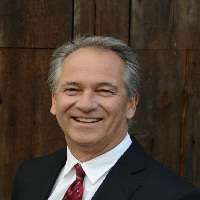
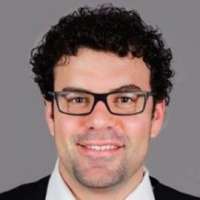
16 CE Speakers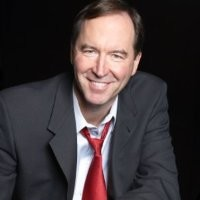
OVERVIEW
Going Green: An Advanced Course in Regenerative Approaches For the Holistic Dentist is organized by The Center for Exceptional Practices and will be held from May 07 - 08, 2021 at Dental Ceramics Inc., Richfield, Ohio, United States of America.
Credits: 16 CE
Description:
The Holistic candidate presents many challenges for the treating clinician. Not only are a limited number of ‘holistic’ dental products comparatively available, most largely fail in that a lower regenerative potential and/or factual, peer- reviewed data exists supporting their use. Going green aims to fill this gap of knowledge. From the leading scientist who participated in the development of the Zeramex implant system (formerly DentalPoint) in the late 2000s, Dr. Dieter Bosshardt (Bern, Switzerland), the course provides a comprehensive review of the history and developmental phases of Zeramex implants. Years of animal research and concrete histological data will be presented from a leading scientist who spent years investigating implant surfaces at the histological level leading to their improvements and osseointegration into bone. Participants will gain valuable knowledge regarding histological differences between titanium, titanium alloys and various commercially available zirconia implants at both the bone and soft tissue level. An overview of titanium intolerance, as well as titanium particle release will be discussed as they relate to the current state of knowledge in the field. Going Green will also provide an overview of ‘Holistic’ Biomaterials; their advantages and their limitations. From the author of the best-selling textbook ‘Next Generation Biomaterials for Bone and Periodontal Regeneration’, Dr. Richard Miron, an overview of bone grafting materials will be presented including the development of synthetically fabricated osteoinductive bone grafts, the growth and scientific literature surrounding dentin grafting, their protocols and indications. Furthermore, the ability to drastically concentrate PRF utilizing modern protocols (C-PRF) as well as extend the working properties of PRF from 2-3 weeks toward 4-6 months (e-PRF) utilizing the Bio-Heat technology will be presented providing the ‘holistic’ clinician a new long-lasting barrier membrane fabricated from 100% natural autologous sources. This course is designed for the serious Implantologist wishing to better understand how to maximize clinical outcomes through a better understanding of zirconia implants and holistic biomaterials at work.
Course Objectives:
• Present data demonstrating differences between zirconia and titanium implants regarding their processing with acid and alkali etching. Explain their impact on osseointegration.
• Understand osseointegration at the microscopic level. Discuss the role of immune cells and multi- nucleated giant cells found specifically on zirconia implants.
• BIC values reported in the literature for zirconia implants placed in the jawbone ranged from 18% to 89% with most values in the order of 50%–75%. Understand why low-quality/unstudied zirconia implants dramatically affects osseointegration and why high quality researched zirconia surfaces are in greater demand.
• Understand the advantages of zirconia implants: from better soft tissue integration to a reduction in inflammatory titanium particle release to the surrounding micro-environment. Furthermore titanium undergoes corrosion whereas ceramic biomaterials do not.
• Present a classification of bone grafting materials and their biomaterial integration process at the histological level.
• Discuss available bone grafting material candidates for the holistic dentist/patient. Understand where and when to utilize each class of synthetic bone graft. Understand why one class of synthetic bone grafting material is not a viable solution for all grafting procedures.
? Understand how to maximize the regenerative potential of platelet rich fibrin utilizing horizontal centrifugation. Determine the optimal protocols utilizing concentrated PRF (C-PRF).
? Learn new protocols developed to extend the working properties of platelet rich fibrin (e-PRF) from 2-3 weeks to 4-6 months utilizing Alb-PRF technology.
KEY DATES

07 May, 2021
Event Start Date

08 May, 2021
Event End Date
ACCREDITATION & CREDITS

SPECIALITIES
DentistrySUGGESTED HOTELS
CONFERENCE VENUE
Dental Ceramics Inc.RELATED CONFERENCES & LIVE WEBINARS
Nov 29 - 30, 2026 | Tokyo, Kanto, JP
Aesthetic Medicine
12 CE Credits

By Utilitarian Conferences...
Feb 04 - 05, 2027 | Kuala Lumpur, ...
Dentistry
30 CME
...
...
Quick Links